

Every highway tells a story — of movement, opportunity, and progress. But some corridors also carry stories of conflict, near-misses, unsafe crossings, and unpredictable patterns that put lives at risk.
The Hapachara–Tulungia section of NH-31 in Assam was one such corridor. High pedestrian movement, unauthorized openings, school zones, fog-prone conditions, and multiple conflicting turning movements created an environment of daily risk.
Translink was engaged by NHIDCL to conduct a comprehensive Road Safety Audit (RSA). What followed was not merely an engineering review — it was a transformation in how a corridor could function, protect, and sustain safe mobility.
Test Content
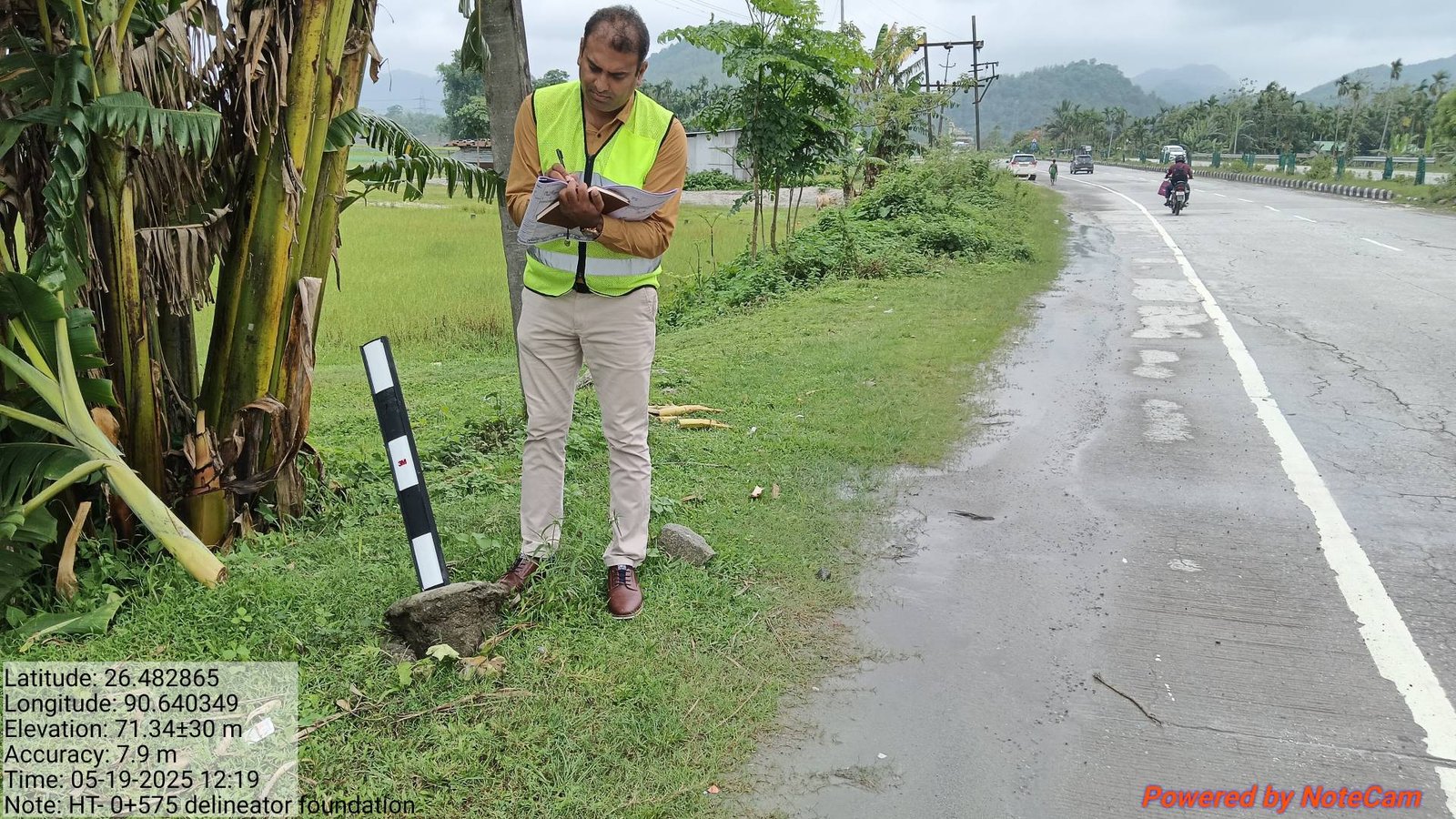
Transforming the Hapachara–Tulungia Corridor
The Challenge
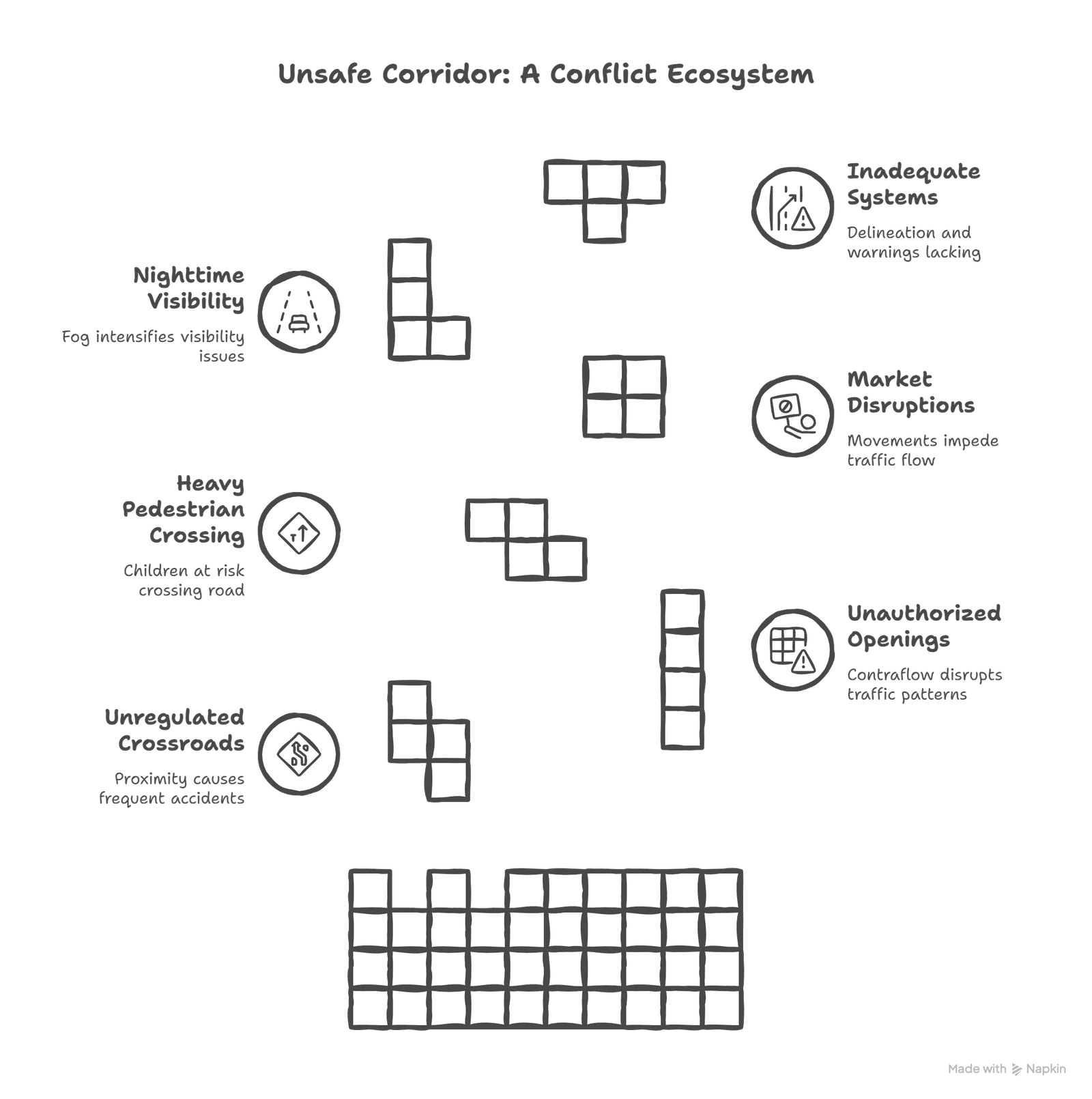
The corridor experienced:
- Unregulated crossroads in close proximity
- Unauthorized median openings resulting in contraflow
- Heavy pedestrian and school-going children crossing at-grade
- Market-related movements disrupting traffic flow
- Nighttime visibility challenges intensified by fog
- Inadequate delineation and warning systems
These conditions created an ecosystem of continuous conflicts, especially involving vulnerable road users.
- Test
- Test
- Test
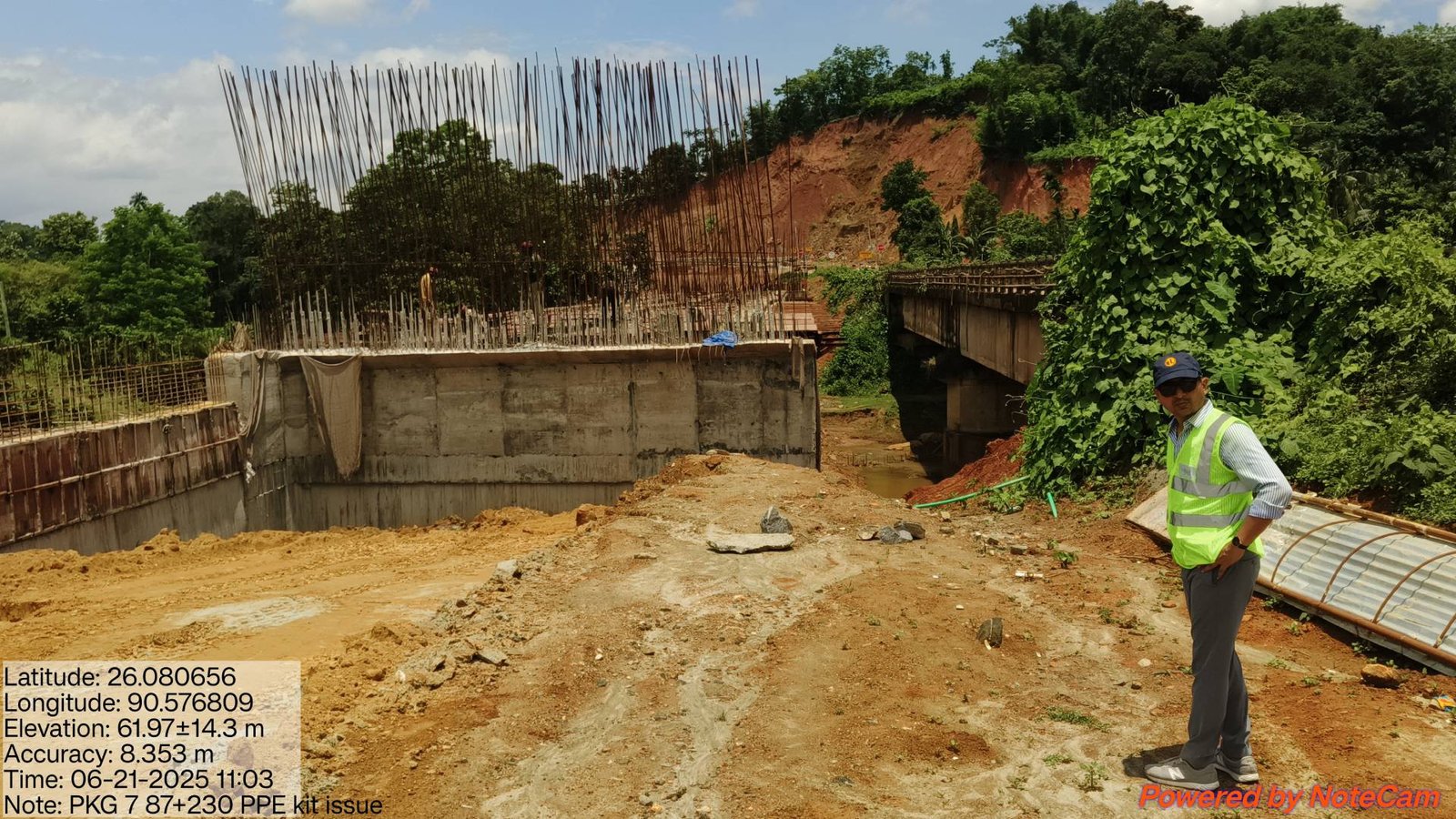
Translink’s Diagnostic Lens
Instead of treating deficiencies as isolated issues, Translink applied a multi-dimensional safety intelligence approach, combining:
- Behavioural movement mapping
- Desire line analysis
- Speed environment evaluation
- Night audits with calibrated reflectivity checks
- Drone-based conflict mapping
- Geometry consistency review
- Access behaviour assessment
This revealed a clear insight:
Most safety risks were behavioural and operational, not purely geometric.
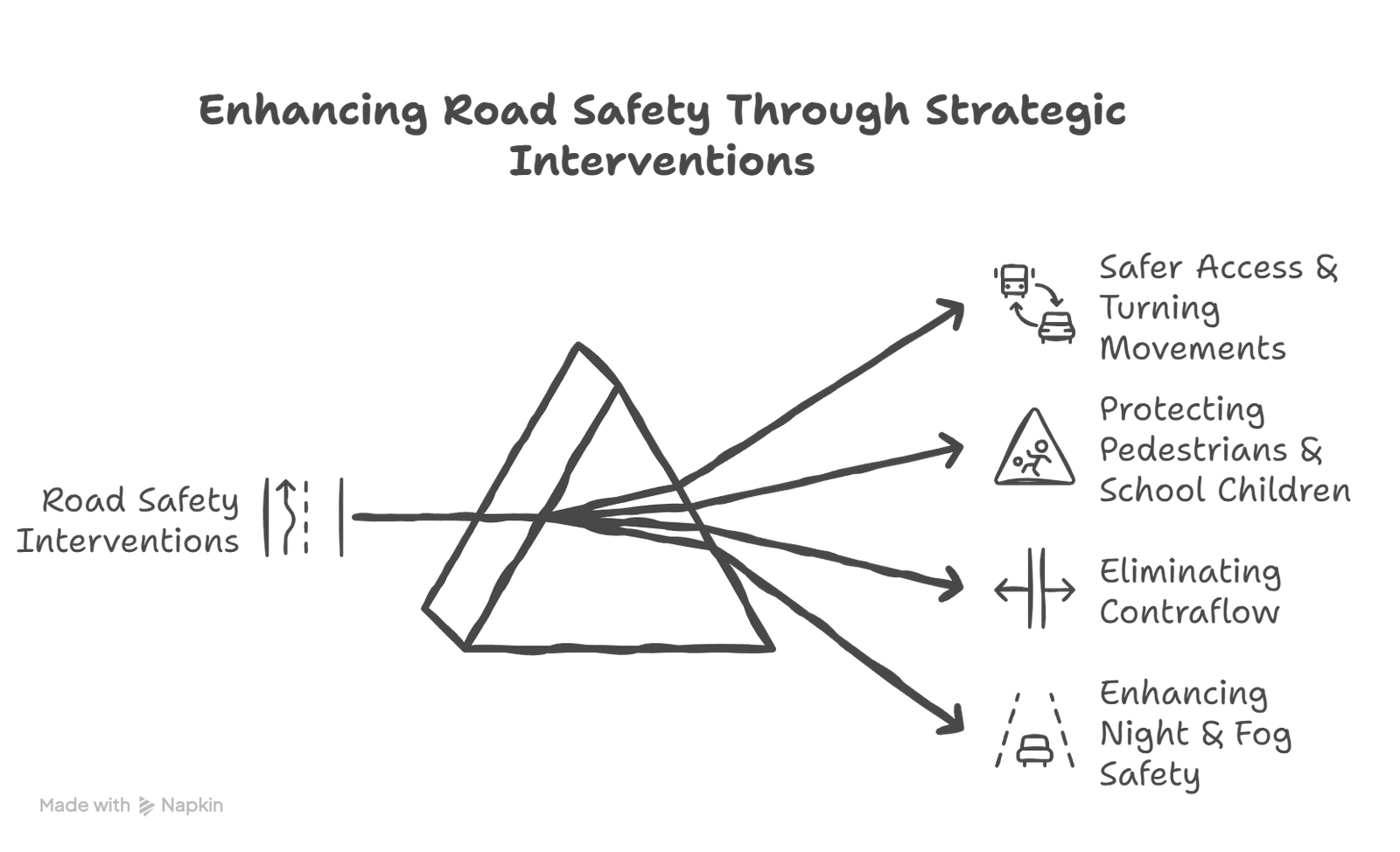
Strategic Interventions Recommended
1.Safer Access & Turning Movements
- Closure of unauthorized openings
- IRC-compliant median opening upgrades
- Turning storage lanes
- Smooth radii to ensure predictable vehicle behaviour
2.Protecting Pedestrians & School Children
- Proposed Foot Over Bridge (FOB)
- Refuge islands for mid-block crossings
- Designated pedestrian crossings with improved visibility
3.Eliminating Contraflow
- Removal of unsafe entry points
- Channelisation and lane guidance
- Service-road-based access restructuring
4.Enhancing Night & Fog Safety
- Retroreflective markings
- Hazard markers at curves
- High-intensity delineators
- Fog-route advisory signage
Expected Impact
The bundled interventions are projected to deliver:
- 70–80% reduction in conflicts
- Elimination of severe head-on risks from contraflow
- Dramatic improvement in pedestrian safety
- More predictable driving environment
- Safer fog-season travel
This case demonstrated how technical precision, behavioural insight, and human sensitivity reshape safety outcomes.
What This Case Reveals About Road Safety
The Hapachara–Tulungia study reinforces three truths:
- Unsafe behaviour emerges when design does not guide movement.
- Unregulated access is the single biggest creator of risk on national corridors.
- Vulnerable users must be engineered into the design, not engineered around it.
The case study underscores the importance of designing with human behaviour in mind, not against it.